Audience conversations
Reviewed public Reddit discussions to surface recurring frustrations, record-keeping habits, workarounds and differing attitudes toward property-management software.
Independent research & strategy
Examining the product, its audience, market alternatives, and opportunities to improve acquisition and early engagement.
PropertyStory is a property-management product intended to help property owners keep information about their properties organised. This independent project explored the product, public audience conversations, competitor offerings and a publicly shared acquisition experiment.
How could PropertyStory better communicate its value, reach an appropriate audience, and move interested visitors toward completing registration and experiencing the product?
The founder shared results from a Reddit traffic campaign. The figures showed activity at the ad level and along the website path, but did not establish why visitors did not complete registration.
Spend: $11.82 of a $40 budget. No genuine completed free signups were reported.
Reviewed public Reddit discussions to surface recurring frustrations, record-keeping habits, workarounds and differing attitudes toward property-management software.
Compared positioning and feature coverage across Landlord Studio, Innago and TenantCloud, alongside DIY approaches such as spreadsheets and cloud folders.
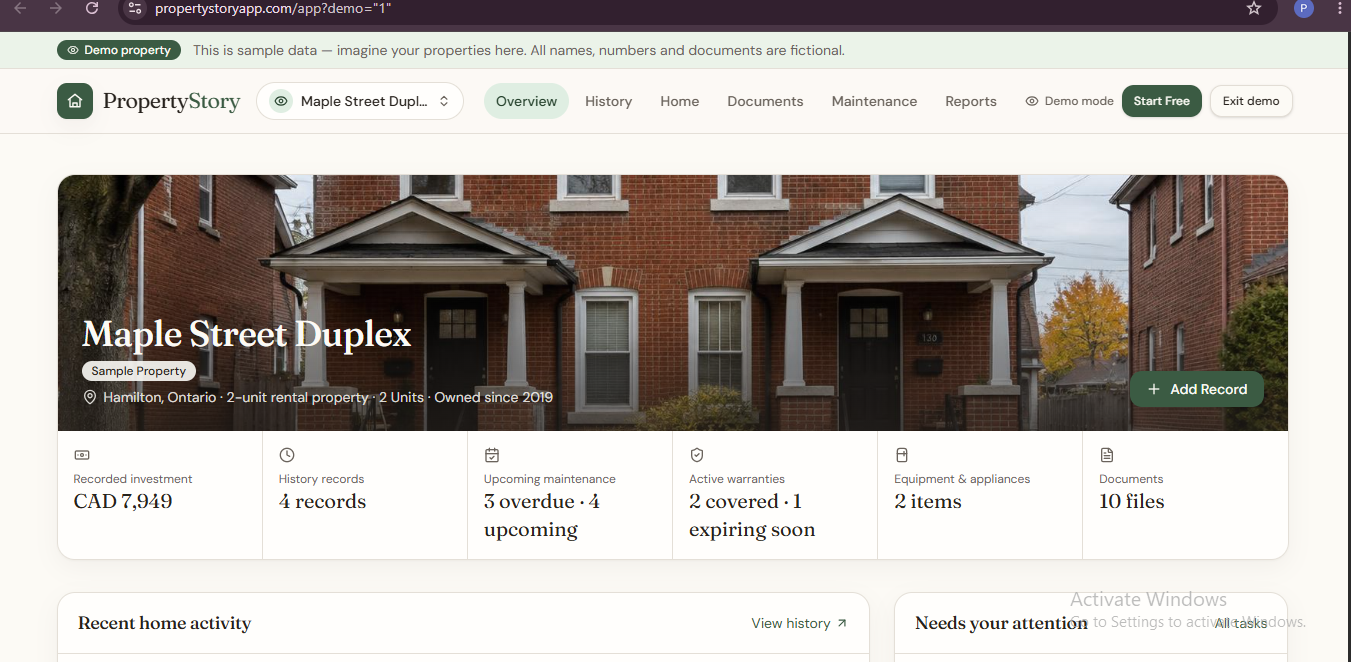
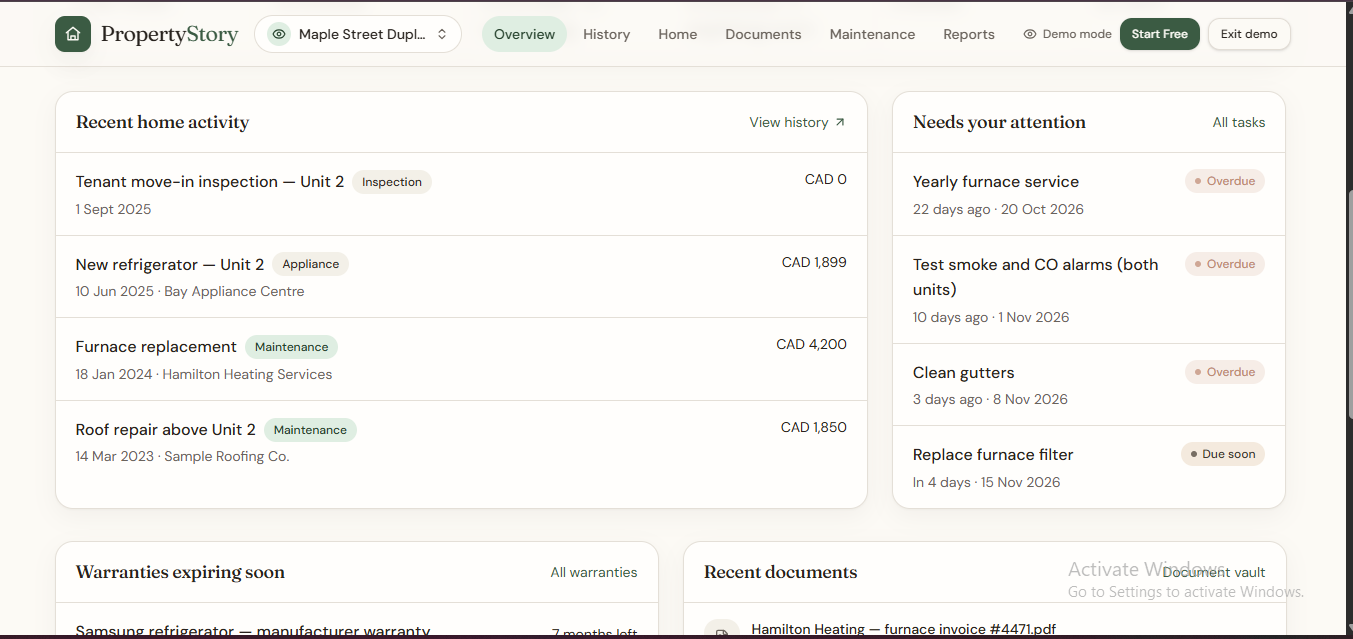
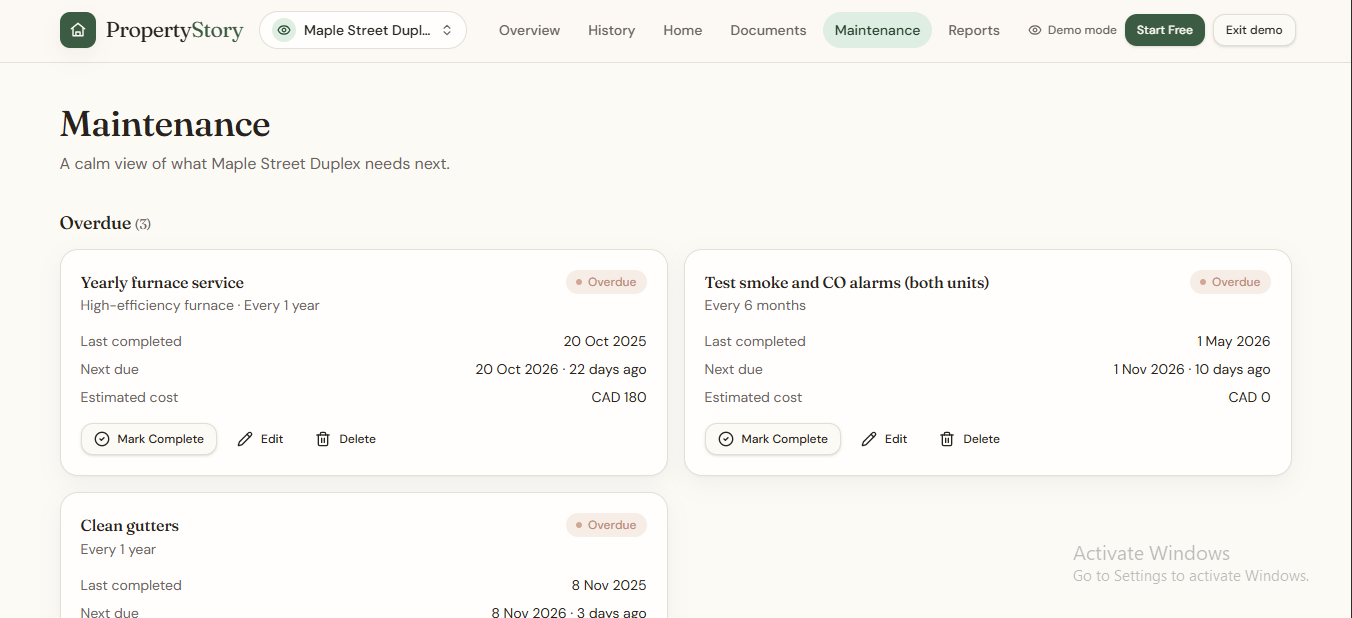
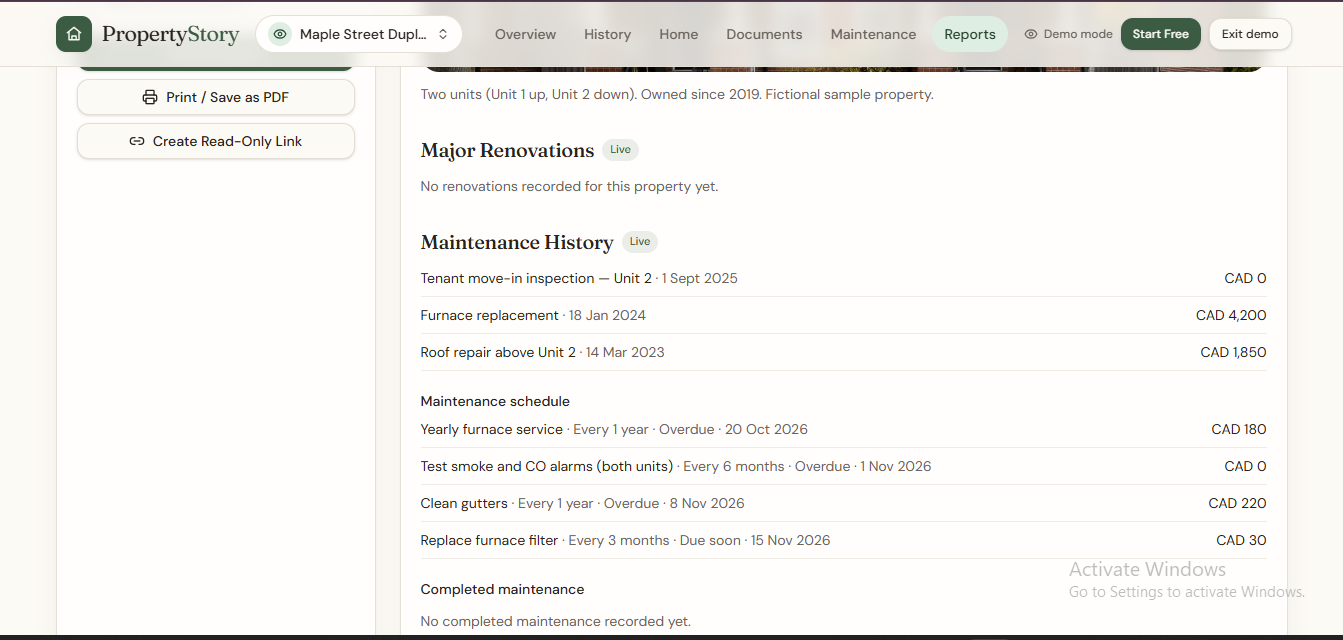
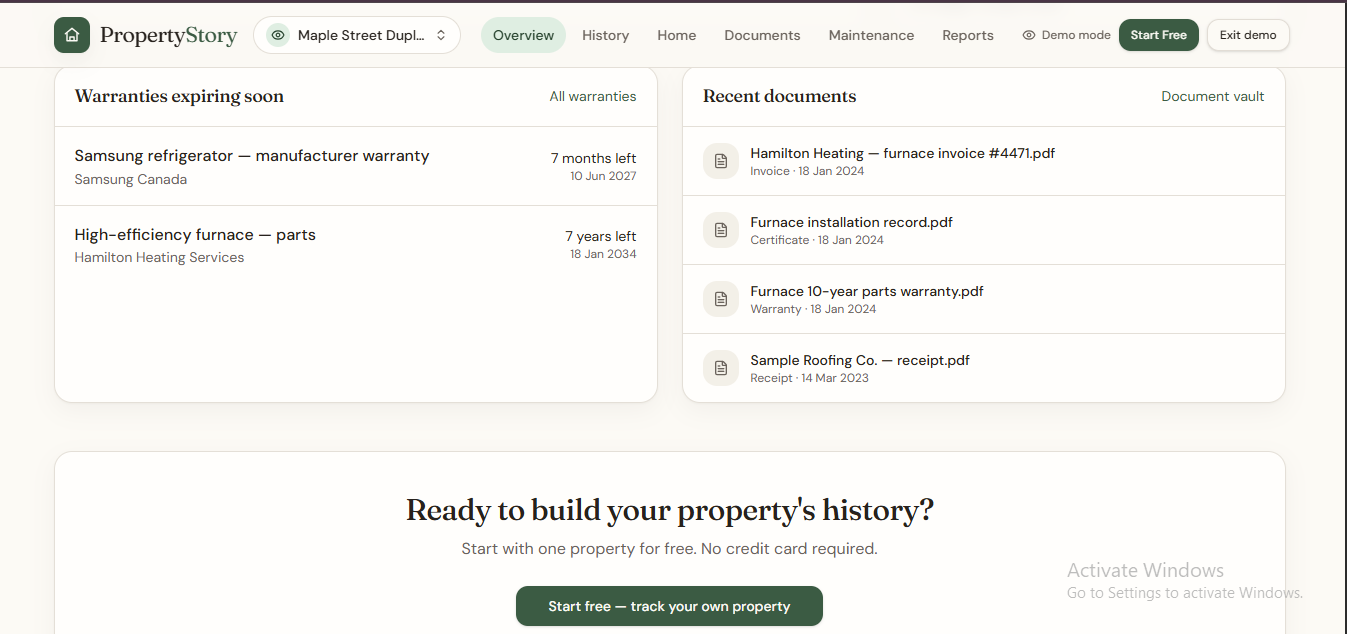
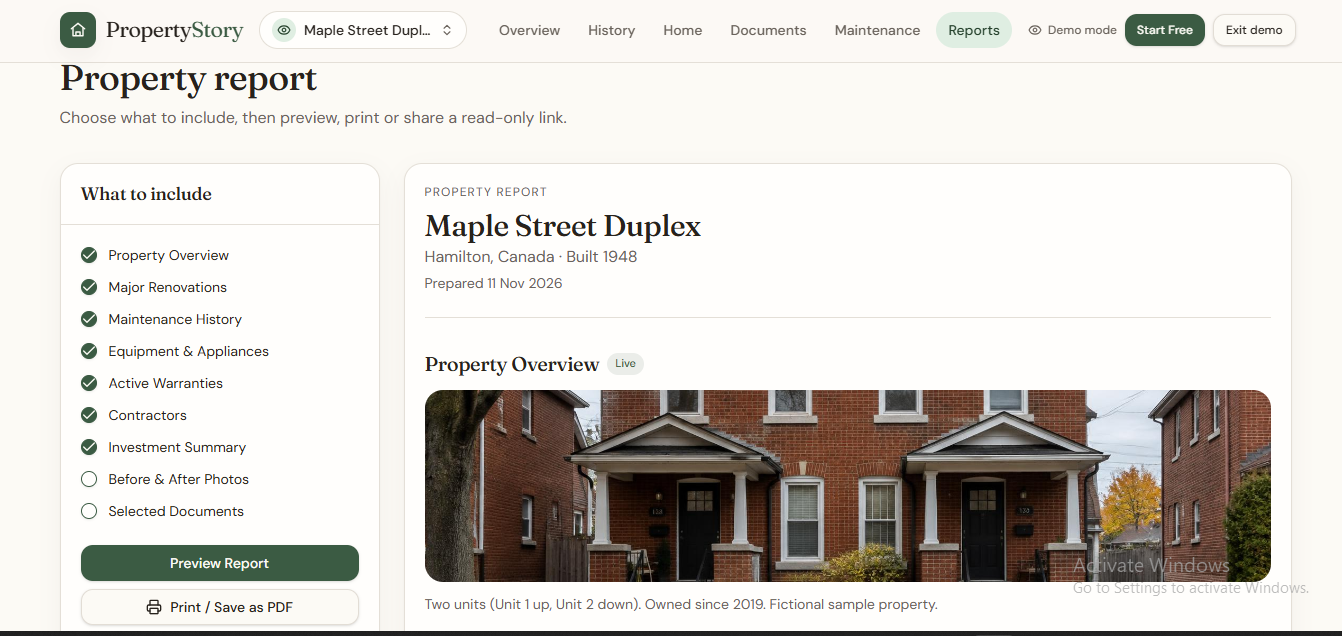
Explored the demo across overview, property history, documents, maintenance, reports, warranties, expenses and related records.
Reviewed the founder’s publicly shared Reddit campaign figures and the path from ad engagement to website visits and signup activity.
Information could be spread across text messages, spreadsheets, email, cloud storage, phone photos and paper. Receipt organisation and maintenance records were among the frustrations raised. At the same time, some landlords were satisfied with their existing spreadsheets or tools, reinforcing that the problem and need were not universal.
Property information, receipts, maintenance conversations and documents can live across different tools. This creates a potential need for a more connected record, although the extent of the problem varies by owner.
Spreadsheets, cloud folders, email and specialist software already serve some owners. The product would need to make its value clear relative to both established tools and simple habits.
The demo brought together property records, history, maintenance, documents, expenses, warranties, reports and related information. The opportunity is to make that connected workflow tangible rather than describe features in isolation.
The public campaign reported ad clicks and attributed website visits, with some visitors reaching the signup page but no completed free signups reported. The difference between clicks and attributed visits is not explained by the available data.
Start with a specific segment, such as small self-managing landlords, and validate the problem through direct conversations before broadening the audience.
Show how property information can be brought together across history, maintenance, documents and reports. Make the benefit concrete before asking visitors to register.
Clarify why the connected property record is useful compared with spreadsheets, folders or existing property-management tools. Treat the differentiation as a hypothesis until tested.
Track completed registration and the first meaningful product action, then investigate where people drop off. Clicks and visits alone cannot establish product adoption.
This project was based on publicly available qualitative research, product exploration and public campaign information. I did not have access to internal analytics, customer interviews, usability testing, verified tester feedback or retention data. The recommendations remain to be validated through further research and testing.